
Pool Heat Pump vs Gas Heater: Which to Use & When
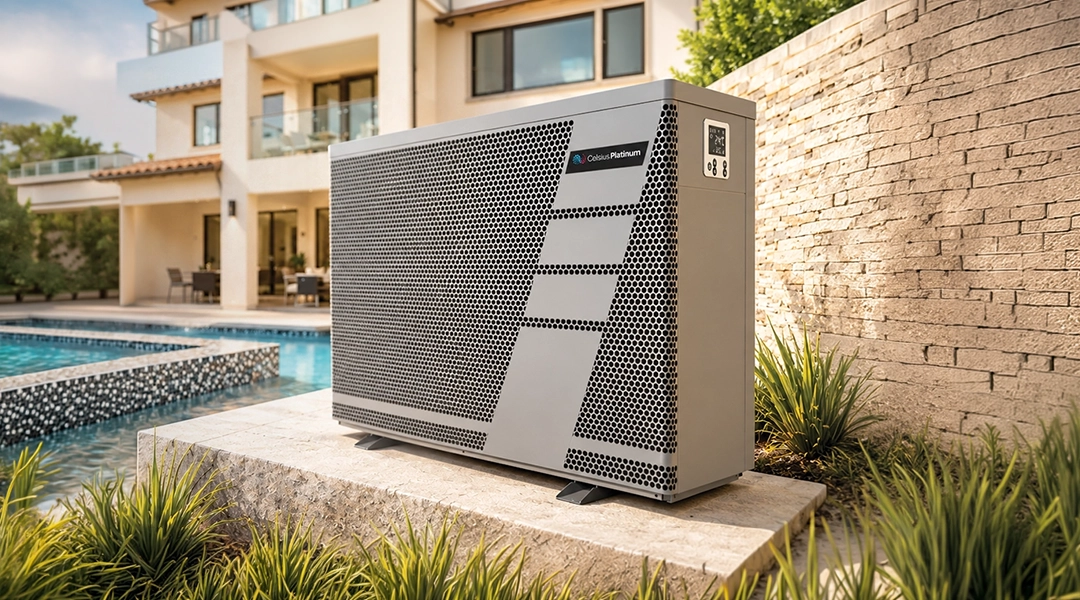
A lot of pool heating frustration and wasted money comes down to one simple misunderstanding: treating a heat pump and a gas heater like they are interchangeable options. They are not. They are good at completely opposite jobs and matching the right tool to the right job is where the real savings and performance come from.
What each one is actually for
A gas heater heats pool water fast and will work regardless of how cold it is outside. Turn it on and it puts a lot of heat into the water quickly. The trade-off, and it is a big one, is the running cost, which is high and a shorter real-world lifespan than most people expect, albeit against a lower purchase price. Gas is the right tool when you need to heat cold water in a hurry or push a spa up to 35 to 38 degrees, where electric heating is comparatively slow.
This is also what makes gas ideal for spontaneous use. Grandkids turning up on the weekend, family coming over, hosting a party or simply have an inkling for a last-minute swim? Fire up the gas and the water is comfortable by the time everyone is ready to jump in. The alternative, having a heat pump ready on demand, means running it continuously on the chance someone swims. Gas lets you heat when you decide to, rather than paying to keep a pool warm in anticipation.
A heat pump works on a different principle entirely. It does not burn fuel to make heat; it uses electricity to move heat that is already in the air into the water. That is why it can deliver several units of heat for every unit of electricity it draws, a ratio measured as its coefficient of performance, or COP. Published figures for pool heat pumps reach the mid-teens to low twenties in ideal conditions and sit around 4.5 to 5 at 15-degree air, this is a ratio 1:4.5-5 (1kW electrical input converted to 4.5-5 kW heating output). A gas heater, by contrast, runs at roughly 80 to 95 percent efficiency, turning most, but not all its fuel into heat, so a little under one unit of heat per unit of fuel. That efficiency gap is the reason a heat pump costs less to run.
Because it burns no fuel on site, a heat pump also produces no combustion emissions at the pool. Its overall footprint depends on where the electricity comes from. Grid power still carries emissions but pairing this with solar PV, a heat pump can approach zero running emissions, which a gas heater cannot, since it burns fossil fuel by design. Modern units also use lower global-warming-potential refrigerant such as R32 (GWP around 675), well below the older refrigerants they replaced.
The heat pump trade-offs
A heat pump’s trade-offs are real, though. Because it moves heat gradually, it is slow to haul a cold pool up from scratch and is at its best topping up, holding a temperature, and gradually heating rather than outright raw heating performance. It also costs more upfront than gas. Against that, it tends to last; heat pumps are commonly backed by multi-year parts warranties, with compressor and heat exchanger cover often extending many years beyond that, where gas heaters typically have a shorter real-world life. So, ask a heat pump to heat a cold pool fast and it struggles; ask it to hold a pool steady across the season and that is exactly what it is built for.
How the smart setups combine them
On pools where the target temperature is non-negotiable year-round, the efficient pattern is to let each heater do what it is good at. Gas brings the baseline up quickly first thing, then the system hands over to the heat pump to hold and gradually lift the remaining temperature requirement throughout the day. The heat pump does the cheaper maintenance work, and the gas does the fast recovery, whether that is every morning, or after a run of bad weather, rather than carrying the day’s heating load on its own.
There is a specific thing to avoid here. Running a heat pump overnight, on the assumption that off-peak power makes it cheap, is usually the worst time to run it. Overnight is when the air is coldest, so the heat pump’s efficiency is at its lowest, and it is also when heat loss off the pool is highest. You end up running the least efficient heater during its least efficient window against the largest losses. The better approach is to leave the pool overnight and use gas in the morning to bring it back up to temperature quickly after the overnight loss, rather than running either heater through the cold of the night. Let’s also not forget the efficiency a pool blanket can provide during those colder nights as well.
In practice this is how these systems get specified. On one Gippsland property in Rural Victoria with a year-round pool heating requirement and no pool cover, where overnight losses are larger precisely because the pool is uncovered, the design used gas first thing in the morning to recover the heat lost overnight, then handed over to the heat pump to hold that temperature through the day. Because gas makes up the overnight loss quickly, it only needs to run for a small part of the morning, with the heat pump doing the maintenance for the rest of the day. A blanket reduces that overnight loss further, so the gas runs even less, but the pattern holds either way: gas does the fast recovery, the heat pump does the efficient maintenance.
None of this makes gas the main heater. For most of the season the job is maintenance, holding a steady temperature day to day, and that is the heat pump’s work, done at a fraction of gas’s running cost. Gas earns its place for the fast jobs: morning recovery, bad weather, and those spontaneous swims. In a well setup system, the heat pump does the bulk of the hours and gas does the short, sharp bits.
Plumbing it so they cooperate
Where both heaters serve one pool, the controller and plumbing matter. A common approach uses a diverter valve ahead of the heat pump that sends most of the flow through it, with a smaller share routed to the gas heater, so the heat pump can run independently under automation while the gas is available when needed. As a rule, you do not send the entire flow through the heat pump. The exact split is set during design, but the principle is that the two heaters run on a controller that favours the cheaper one and only calls the more expensive one when it must. This is the logic behind a properly specified hybrid pool heating system.
Whatever you have got, there is a next step
The point of all this is to match the tool to the job, not to sell you one heater. So, wherever you are now:
Thinking of decommissioning your gas? Do not. Keep it and add a heat pump, so you get cheaper day-to-day maintenance and keep the fast recovery for when you need it.
Got a heat pump that is costing a little much to run? Solar thermal can carry the daytime load and cut how hard the heat pump has to work, which is where the running cost goes.
Got both already and want to cover every base? Look at solar to round it out, so the sun does the bulk of the heating for free and the heaters fill the gaps.
And whichever of these you have: get a blanket and more importantly, use it. It is the one thing that helps every setup, on every pool, every night and costs nothing to use but a very short amount of your time.
Not sure which combination fits your pool? Get a pool heating quote and we’ll match the system to how you actually use it.
Frequently Asked Questions
Is a heat pump or gas heater better for a pool?
They suit different needs. A gas heater heats quickly and works in any weather but costs more to run. A heat pump is far cheaper to run but heats slowly, so it is best at maintaining temperature rather than heating a cold pool fast. Many pools that need a guaranteed temperature year round use both, with gas for rapid heating and the heat pump for cheaper day-to-day maintenance.
Why is my heat pump slow to heat the pool?
Heat pumps are designed to maintain temperature, not to heat a cold pool quickly. They move heat from the air into the water at low running cost, but that process is gradual. If you need fast heating, for example warming a cold pool in a few hours or running a spa, gas does that job far better while a heat pump holds the temperature once it is reached.
Is it cheaper to run a pool heat pump overnight?
Usually not, even on off-peak power. Overnight is when the air is coldest, so the heat pump runs at its lowest efficiency, and it is also when the pool loses the most heat. Running it then means using the heater at its weakest against the largest losses. For overnight heating in a combined system, gas is generally the better choice.
You mentioned R32, but what about R290?
R290 (propane) is another refrigerant used in some newer heat pumps, with a much lower global warming potential again: around 3, against roughly 675 for R32. The catch is that R290 is an A3 highly flammable gas compared to R32 using A2L Mildly flammable gas, so units using it must be certified for sale in your state against the relevant Australian standards, such as AS/NZS 5149.2 and AS/NZS 60335.2.40.
Queensland enforces this most strictly: an R290 appliance must hold a Gas Device Approval Certificate (GDAC) before it can be legally sold there, and Queensland publishes a public register of approved hydrocarbon refrigerant appliances so a buyer can confirm a specific unit. A compliant supplier will have its certification ready to show you. Installation matters too: any unit that requires hardwiring rather than a simple plug-in connection, which in practice means most units of any real size, needs a licensed installer with hydrocarbon qualifications in Queensland to assess the site and sign off on the work. So, if you are considering an R290 unit, it is worth checking both the unit’s certification and your installer’s credentials for your state.
Figures in this article come from Boss Pool Heating modelling and real project assessments, accurate at the time of writing (June 2026). Pool heating performance depends on your specific pool, climate, and system design, and energy costs change over time. Treat these numbers as a guide, not a guarantee.

Business Development Manager | Boss Pool Heating
